 May
21
May
21
Tags
Disability and Creativity: Alexander Pope
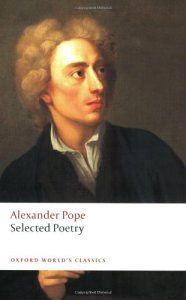 On the 21st of May 1688, English poet Alexander Pope was born in London, England. At twelve, Pope composed his earliest extant work, Ode to Solitude; the same year saw the onset of the debilitating bone deformity that would plague Pope until the end of his life. Originally attributed to the severity of his studies, the illness is now commonly accepted as Pott’s disease, a form of tuberculosis affecting the spine that stunted his growth—Pope’s height never exceeded four and a half feet—and rendered him hunchbacked, asthmatic, frail, and prone to violent headaches. His physical appearance would make him an easy target for his many literary enemies in later years, who would refer to the poet as a “hump-backed toad.”
In The Life of Pope (1781), Samuel Johnson vividly described Pope’s ailments. “Dr. Johnson provides a poignant account of Pope’s efforts to make himself presentable in company. “His stature was so low that, to bring him to a level with common tables, it was necessary to raise his seat.” Because of his sensitivity to cold he wore a kind of fur doublet under a “shirt of very coarse warm linen.” In order to hold himself erect he wore a “bodice made of stiff canvas.” His legs were so thin that “he enlarged their bulk with three pair of stockings.” His hair having fallen out, Pope often wore a velvet cap and his “dress of ceremony was black with a tye-wig, and a little sword.” This is all part of an effort to appear as normal as possible. (…) the attempt to disguise such deformity could itself be interpreted as affectation, hence justification for ridicule. This is precisely what happens to Pope. Thomas Bentley sneers that ” ‘Tis very amazing, to see a little Creature, scarce four Foot high, whose very Sight makes one laugh, strutting and swelling like the Frog in Horace, and demanding the Adoration of all Mankind, because it can make fine Verses.” Pope may be the greatest poet of his age, but he is also a notable cripple, and that fact alone renders nugatory all other pretensions to respect or acceptance.” (Roger Lund, ‘Laughing at Cripples: Ridicule, Deformity and the Argument from Design’, Eighteenth-Century Studies, Vol. 39, No. 1, Fall, 2005).
 In an early article in The British Medical Journal, Pope’s health condition was described as follows: “A fascinating medico-psychological case, Alexander Pope (…) was intimately associated, both professionally and personally, with the most eminent medical men of Queen Anne’s reign. It was Radcliffe who successfully treated him for a nervous breakdown at the time of puberty. All his life Pope was in the hands of physicians, whom he changed frequently, sometimes having three or four at once. In 1735 he was a patient in the home of Cheselden, whom, together with Mead and Douglas of the “soft obstetric hand,” he has immortalized in verse. Inordinately fond of quacks, he publicly defended Joshua (” Spot “) Ward of “drop and pill” notoriety. About four feet high, with a severe rachitic kyphoscoliosis, the poet was so weak that he could not dress or undress himself unaided. Subject to terrible headaches, which he tried to assuage by drinking coffee, he was also afflicted with dyspepsia, occasioned by his love of liqueurs and highly seasoned foods, his pet dish being potted lampreys. In this frail body dwelt a twisted, waspish mind. Ironically enough, his polemics, masterpieces of accumulated venom, are still read by many who find his more lasting contributions to English literature unreadable.” (The British Medical Journal, Vol. 2, No. 4099, Jul. 29, 1939).
The study of disability has come a long way since this 1939 article. Nowadays, in both literary criticism and the humanities, it proves to be fuelled by the academic focus on identity studies, the increasing demand for diversity in scholarly subjects and the framing of disability within the context of political rights and matters of integration. In Disability Studies: Enabling the Humanities (Modern Language Association of America, 2002), we read that, increasingly, disability appears as a “representational system more than a medical problem, a social construction rather than a personal misfortune or a bodily flaw, and a subject appropriate for wide-ranging intellectual inquiry instead of a specialized field within medicine, rehabilitation, or social work.” While disability influenced the literary production of many writers throughout history, the case of Alexander Pope is possibly the most poignant. The longevity of his art, however, is proof to the fact that the poet did not let his physical impediments stop him in the exploration of his genius: 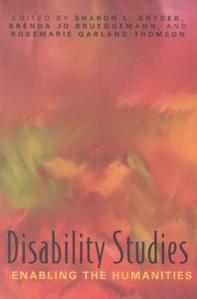 “Pope’s deformities and severe illnesses did not adversely affect his productivity but had a marked influence on the content and the nature of his writings. He attacked others sharply and his wit and his great sense of satire provoked responsive attacks upon his deformities by the victims of his writings. His own works were devoid of self-pity and full of brilliant humour. His physical and emotional problems did nothing to diminish his literary lustre. His genius and his vast productivity were aided by his indomitable will, his lack of sense of self-pity, and his philosophical acceptance of his deformities and disabilities as part of God’s will.” (E M Papper, ‘The influence of chronic illness upon the writings of Alexander Pope’, Journal of the Royal Society of Medicine, Volume 82, June 1989).


 A R T L▼R K
Reblogged this on First Night Design.
LikeLike
Rape of the Lock was part of my English O’level course and I read quite a bit of his work. Great post thank you.
LikeLike
We are glad you enjoyed it 🙂
LikeLike
Reblogged this on Big Red Carpet Nursing and commented:
We are each a sum of all our experiences, and our unique responses to all them. Pope offers an interesting example.
LikeLike
This was sad and also fascinating. I cannot imagine the poor man’s suffering! Thank you for sharing him with me!
LikeLike
Many thanks, L’Adelaide, we learn something every day ))
LikeLike
Hello admin i see you don’t monetize your blog.
You can earn extra money easily, search on youtube for:
how to earn selling articles
LikeLike
Pingback: Disability and Creativity: Alexander Pope | A R T L▼R K | First Night Design