
On the 14 of June 1926, American Impressionist expatriate Mary Cassatt died in Château de Beaufresne, near Paris, at the age of 82. Usually remembered as a painter of sentimental images of mothers and children, Cassatt is not generally considered as an artist of radical beliefs. In Eve’s Daughter/Modern Woman (University of Illinois Press, 2004), […]
Category Archives: Art
 June
13
June
13
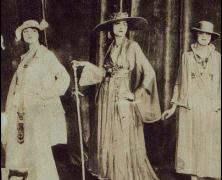
Lucile, Lady Duff-Gordon: Inventor of the Modern Fashion Show
posted by ArtLark
On the 13th of June 1863, Lucy Christiana, Lady Duff-Gordon (née Sutherland), best known as ‘Lucile’, was born in London, England. She gained recognition as a leading fashion designer in the late nineteenth and the early twentieth century. After being abandoned by her first husband, James Stuart Wallace, who left her practically penniless, she set […]
 June
04
June
04
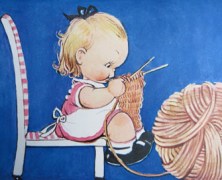
Female Decorative Artists in Early 20th-Century Britain
posted by ArtLark
On the 4th of June 1879, British illustrator and designer Mabel Lucie Attwell was born in Mile End, London. At the turn of the century, her drawings of sentimentalized rotund cuddly infants, started appearing in various media such as: cards, calendars, nursery equipment, pictures, crockery and china ware, dolls, postcards, advertisements, posters, books and figurines. […]
 May
30
May
30
Rubens in Today’s Art Market: Priceless vs. Over-Priced
posted by ArtLark
On the 30th of May 1640, Flemish Baroque painter Peter Paul Rubens died in Antwerp (now Belgium). Known for his history paintings of mythological and allegorical subjects, one of his more recently discovered works, The Massacre of the Innocents (1611–12, oil on panel, 142 × 182 cm, Thomson Collection, Art Gallery of Ontario) powerfully captures […]
 May
17
May
17
Fashion, Mondrian Style
posted by ArtLark
On the 17th of May 1911, the Swedish fashion model Lisa Fonssagrives, widely credited as the first ever supermodel, was born in Västra Götaland County, Sweden. A classic Scandinavian beauty “with impossibly high cheekbones and a cool, penetrating look of well-born entitlement” (Harold Koda, Model as Muse: Embodying Fashion), she posed for some of the most […]
 May
11
May
11
Inorganic vs Organic in Paul Nash’s ‘Totes Meer’
posted by ArtLark
On the 11th of May 1889, British Surrealist painter and war artist Paul Nash was born in London. The older brother of the artist John Nash, he started his professional education at the Chelsea Polytechnic, from which he moved on to the London County Council School of Photo-engraving and Lithography. Eventually, after being spotted by […]
 May
08
May
08
The Story Behind Gauguin’s Biographic Noa Noa
posted by ArtLark
On the 8th of May 1903, the iconic French Post-Impressionist painter Paul Gauguin died in Atuona, Marquesas Islands, French Polynesia. In 1891, Gauguin sailed to French Polynesia allegedly to escape European civilization and “everything that is artificial and conventional”. As a record of his travels, he ended up writing a book titled Noa Noa describing his experiences […]
 May
06
May
06
Depravation in the Art of Ernst Ludwig Kirchner
posted by ArtLark
On the 6th of May 1880, Expressionist artist Ernst Ludwig Kirchner was born in Aschaffenburg, Germany. One of the leading names in the Die Brücke movement, his art was deemed ‘degenerate’ by the Nazis and destroyed in great numbers. The artist ended his life by gunshot at the age of 58 at his house in […]
 May
05
May
05
The Skylon and Churchill Gardens: Contrasting Architectural Visions in Postwar Britain
posted by ArtLark
On the 5th of May 1920, John Hidalgo Moya was born in Los Gatos, California. Some 83 years later, on the 5th of May 2003, Sir Arnold Joseph Philip Powell died in London. The two men were architects and founders of the Powell & Moya Architect Practice responsible for the design of Churchill Gardens in […]
 May
04
May
04
The landscape blockbusters of Frederic Edwin Church
posted by ArtLark
On the 4th of May 1826, American landscapist Frederic Edwin Church was born in Hartford, Connecticut. He was a central figure in the Hudson River School of American landscape painters, combining natural sciences with a spiritual dimension in his works. Early on, Church dropped his teacher Thomas Cole’s predilection for allegory, in favour of a […]
if you ❤ this site

Top Posts & Pages


Top Posts & Pages


 A R T L▼R K